
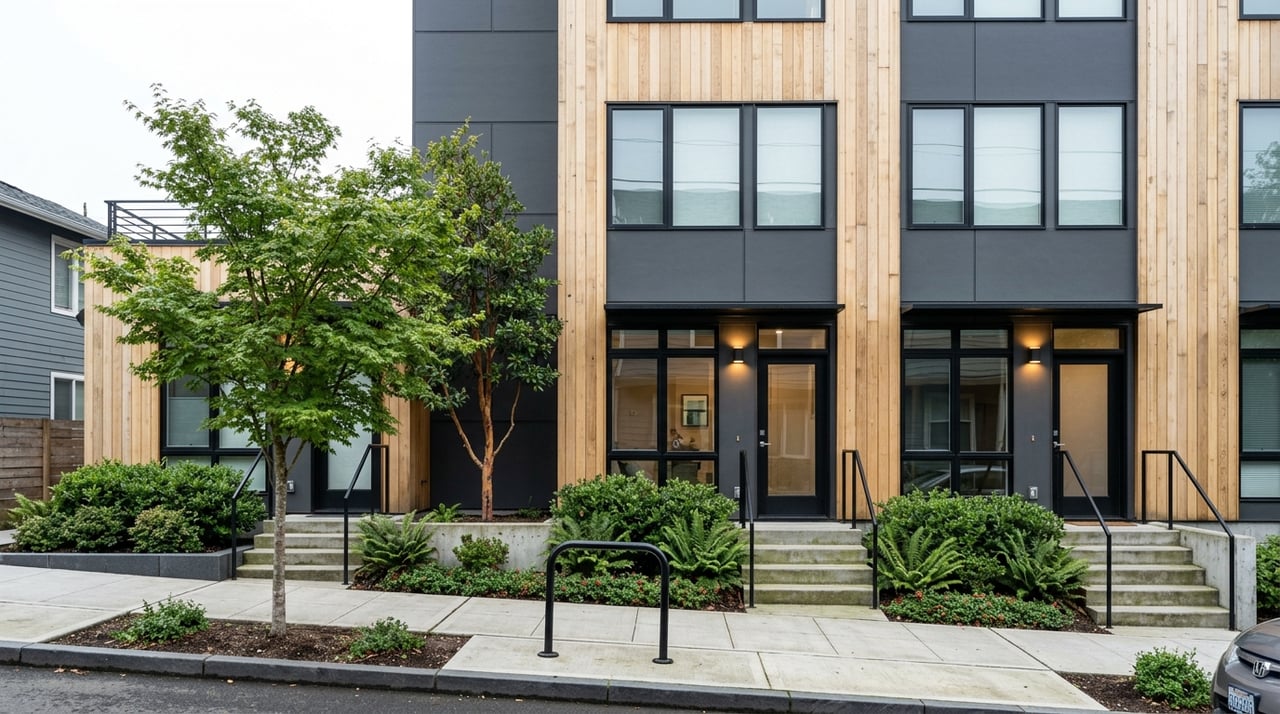
April 2, 2026
Light rail has moved from future promise to daily reality in Bellevue, and that shift is changing how many buyers think about location. If you are weighing where to buy, sell, or invest, it is no longer enough to ask whether a home is in Bellevue. You also need to ask how close it is to a station, what kind of neighborhood surrounds that station, and how much change the city is planning nearby. Let’s dive in.
Bellevue’s completed 2 Line began service across Lake Washington on March 28, 2026, and the city now has six stations plus the downtown tunnel: South Bellevue, East Main, Bellevue Downtown, Wilburton, Spring District, and BelRed. According to the City of Bellevue’s East Link overview, the question has shifted from whether rail will arrive to which station areas will benefit most.
That matters in a market that is already highly competitive. Redfin data for February 2026 shows a median sale price of $1,575,000, around eight days on market, and 13.6% of homes selling above list price. At the same time, Bellevue’s long-range planning assumes 35,000 additional housing units and 70,000 more jobs by 2044, with much of that growth directed toward transit-oriented areas.
One of the biggest mistakes buyers make is assuming rail automatically lifts values everywhere nearby. It does not. A 2022 meta-analysis on rail access and housing prices found outcomes ranging from price declines to gains, depending on service quality, neighborhood form, land-use policy, and local conditions.
That nuance is important in Bellevue. A University of Washington study on Seattle Link found positive post-construction effects for homes within roughly 0.25 to 0.50 mile of stations, but not broad, automatic gains in earlier phases. In practical terms, proximity tends to matter most when it is paired with walkability, supportive zoning, and real redevelopment capacity.
If you want the clearest walk-to-transit story in Bellevue, Downtown stands out. The Bellevue Downtown Station sits near City Hall and Meydenbauer Center, the Bellevue Library is about a 10-minute walk away, and the city’s Grand Connection vision is designed to make the core even more connected and walkable.
For buyers, that usually means convenience and a strong urban lifestyle case. For sellers, it means your property may appeal to buyers who prioritize a more connected routine. The tradeoff is that Downtown is also Bellevue’s most mature station area, so much of that convenience may already be reflected in pricing.
Downtown tends to attract buyers who value easy access to offices, dining, civic amenities, and transit without relying on a car for every trip. Because it is Bellevue’s primary economic and employment center, it also has strong everyday-use appeal.
That does not guarantee outsized appreciation from this point forward. Instead, Downtown often looks more like a proven convenience market than a speculative growth story.
Just south of Downtown, East Main is planned as a 60-acre transit-oriented district with residential, office, retail, and hotel uses. The city describes it as distinct from yet complementary to Downtown in its East Main Transit-Oriented District planning materials.
For buyers, East Main can offer a strong blend of access and slightly more separation from the core. It is close enough to benefit from Downtown Bellevue’s gravity, but it also has its own identity as a smaller urban district.
A key detail in Bellevue’s planning is that there is no transit-oriented development potential west of East Main because the city preserves existing single-family neighborhoods. That means nearby residential pockets may gain convenience value from station access without seeing the same level of major redevelopment as Wilburton or BelRed.
If you prefer access without betting on large-scale neighborhood change, East Main may be one of Bellevue’s more balanced station-area plays.
If you are looking for the area with the most dramatic long-term change potential, Wilburton is hard to ignore. Bellevue’s planning materials show capacity for an additional 14,300 housing units and 44,500 jobs in the Wilburton study area by 2044, making it the city’s biggest transformation story among station areas.
The neighborhood profile still reflects a quieter, greener setting in places today, but the long-term vision is much more urban. That gap between current character and future capacity is exactly why Wilburton draws attention from buyers who are thinking several years ahead.
Wilburton may appeal to buyers who want to get ahead of change rather than buy only after a district is fully built out. It may also appeal to sellers whose homes benefit from increased attention as infrastructure, jobs, and housing expand nearby.
Bellevue has also selected Bellwether Housing for at least 127 affordable homes on city-owned land in Wilburton, with completion anticipated by 2030, according to the city’s station-area and neighborhood planning information. That is one signal that Wilburton’s growth story is moving from concept to execution.
The Spring District has gone from industrial land to a walkable urban neighborhood with housing, office, retail, and amenities. Sound Transit’s 2 Line overview describes the Spring District buildout as including 900 residential units and more than 3 million square feet of office, while the nearby BRIDGE project adds 234 affordable homes.
For buyers, that creates a more visible near-term growth story than in some station areas that are still earlier in transition. You can already see the framework of a mixed-use district taking shape.
BelRed is being transformed from light industrial land into mixed-use, transit-oriented neighborhoods. Bellevue has identified new BelRed projects that can deliver at least 172 affordable homes, plus a mixed market-rate and affordable building that replaces a park-and-ride lot.
This matters because supply can shape demand in two ways at once. Transit access can increase buyer interest, but a larger development pipeline can also create more competition among available homes over time.
BelRed and parts of the Spring District may offer some of the strongest redevelopment upside in Bellevue. They also come with more exposure to active change, including construction, traffic management, and street-level rail activity.
The city has noted in its East Link testing updates that trains move through at-grade intersections in BelRed, so pedestrians and motorists should expect trains at all times. If you are considering this area, it helps to think beyond the station map and evaluate how day-to-day movement will actually feel.
South Bellevue is important, but it is a different kind of transit story. It is more park-and-ride oriented, with a 1,500-stall garage and trail connections to Mercer Slough, according to the city’s East Link project page.
Unlike Wilburton or BelRed, Bellevue’s planning says there is no transit-oriented development potential around South Bellevue because surrounding single-family neighborhoods are being preserved. That makes South Bellevue more of a utility play than a major redevelopment zone.
For nearby areas such as Surrey Downs, Enatai, and Meydenbauer Point, the benefit is often easier regional access rather than a complete neighborhood remake. That can still be meaningful for buyers who value transit connections but want a more established residential setting.
In other words, rail can boost convenience even where it does not trigger large-scale new density.
It is easy to assume the closest home to a station is always the smartest buy. In reality, the right distance depends on your priorities. Some buyers want a short walk. Others want access without the most direct exposure to station activity, traffic changes, or noise.
Bellevue’s mitigation materials for light rail show that the city addressed localized impacts with noise standards, sound walls, maintenance requirements, reduced audible warnings, and ongoing monitoring in South Bellevue. Those details are a useful reminder that rail brings both benefits and operational realities.
A helpful way to frame Bellevue’s station areas is to separate amenity value from supply risk.
If you are buying in Bellevue, light rail should sharpen your search rather than narrow it too quickly. The best fit depends on whether you want immediate walkability, long-term upside, easier commuting, or a neighborhood with less exposure to large-scale change.
If you are selling, the station story around your home matters, but the message should be precise. Buyers respond best when the value proposition is clear, whether that means walkable access, future growth potential, or practical regional connectivity.
In a market this competitive, small differences in location story can have a meaningful effect on demand. That is why station-area analysis is now part of smart Bellevue pricing and positioning.
If you want help evaluating how light rail may affect your Bellevue home search or your property’s market position, The Schuler Team LLC offers the local market insight, strategic guidance, and concierge-level support to help you make a confident move.
August 20, 2026
August 13, 2026
August 6, 2026
August 6, 2026
July 23, 2026
July 16, 2026

July 9, 2026

July 2, 2026
June 25, 2026
Whether buying or selling, Michele and her team deliver unmatched service, helping you find your dream home or maximize your property’s value. With a focus on building lifelong relationships, we make your real estate journey seamless and rewarding. You’re more than a transaction – you’re family. Let’s connect and get started today!