
February 19, 2026
Moving for a new tech role and trying to make Redmond feel familiar fast? You are not alone. Between hybrid work, changing transit, and a tight housing market, there is a lot to weigh. This guide gives you a clear picture of commutes, neighborhoods, pricing, schools, and timelines so you can make confident choices. Let’s dive in.
Redmond centers the Eastside tech scene with Microsoft’s corporate campus and growing transit hubs. The city is adding new homes and amenities near Link light rail stations while preserving established neighborhoods. Your first filter is simple: are you commute-first or lifestyle-first? That choice will narrow your search quickly.
Two light rail milestones matter for planning. The 2 Line to Downtown Redmond and Marymoor Village opened on May 10, 2025. The final Crosslake segment that connects directly to Seattle via I‑90 is scheduled for March 28, 2026. Once the full line is live, you will have a stronger non-driving option across the lake.
What this means for you: If you plan to rely on transit, living within a short walk or bike of Downtown Redmond, Marymoor Village, Overlake Village, or Redmond Technology Station can simplify your week.
King County Metro’s RapidRide B Line remains the crosstown backbone between Redmond, Overlake, and Bellevue. Local routes are being tuned to feed Link stations, so bus-to-rail transfers are getting easier. If your office is near a station or B Line stop, the bus can cover shorter hops without a car.
SR‑520 and I‑405 are the main corridors, and they get crowded during peak hours. Federal reviews point out that peak travel time reliability on such facilities is often low, which is why many tech employees choose transit or live closer to campus. If you plan to drive, budget a generous peak-time buffer and test your door-to-door commute at the hours you will actually travel. You can read more about peak reliability in FHWA’s overview.
Redmond is threaded with trails that connect directly to workplaces and Link stations. The regional Eastrail, Sammamish River Trail, and Redmond Central Connector make bike or bike-plus-rail a practical option. Explore connections and bike parking through Eastrail’s rider resources.
Major Eastside employers support commute programs, transit passes, and campus shuttles. Hybrid schedules also shape where you live. Recent reporting notes Microsoft’s guidance of a three day in-office baseline for many Puget Sound roles. Always confirm your team’s exact expectation before you lock in a housing radius.
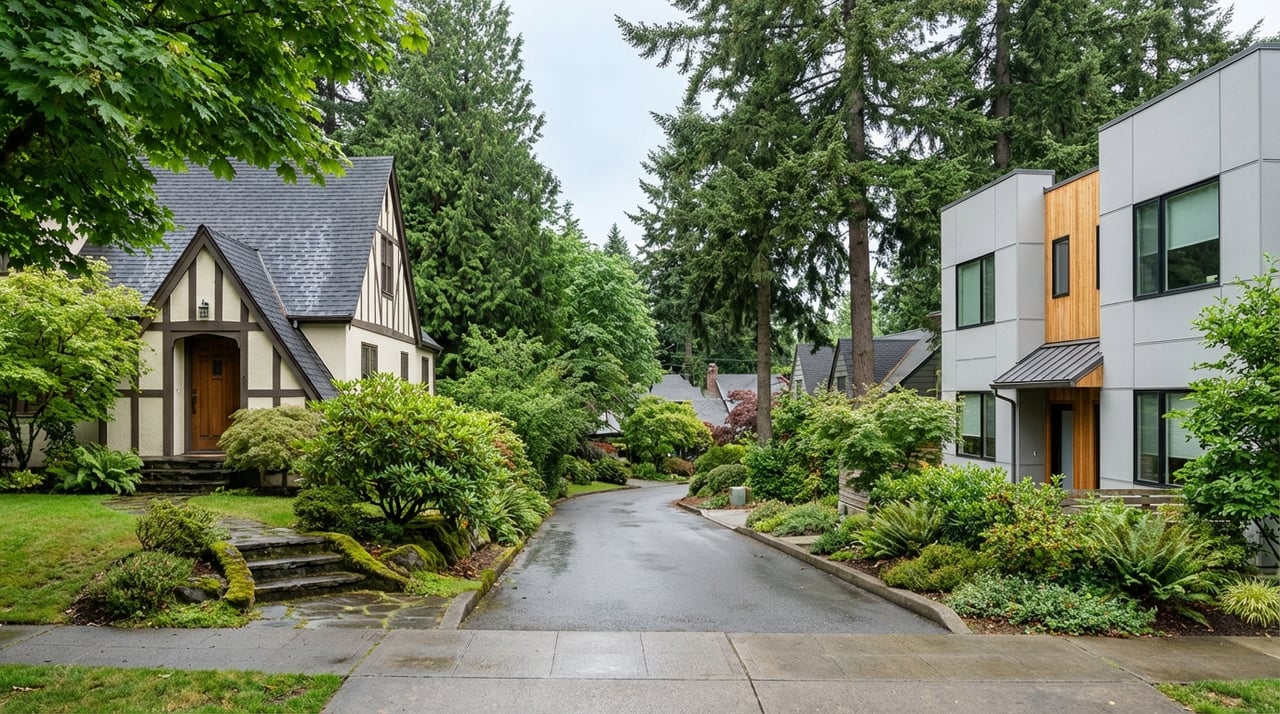
If you want a yard and a residential feel, focus on Education Hill, Willows–Rose Hill, and Grass Lawn. These areas have mature trees, detached homes, and a classic neighborhood rhythm. Inventory can be tight, and homes near popular school boundaries tend to draw more interest.
Price signal: Citywide, Redmond’s median was about $1.27M in December 2025, but neighborhood medians vary. Realtor.com’s snapshot at that time showed Downtown Redmond near $900k, Willows–Rose Hill closer to $1.5M, and Grass Lawn around $625k. See Realtor.com’s Redmond market overview for current figures.
Townhomes and cottage-style infill have grown in southern corridors and near Overlake. These homes trade private yard space for lower maintenance and closer access to transit and retail. Many buyers like the modern layouts and shorter upkeep lists.
Downtown Redmond, Marymoor Village, and Overlake Village concentrate mid-rise condos and rentals near stations. The city’s long-range plan aims to add more homes and amenities near these hubs, which expands options for car-light living over time. For policy context, explore the city’s growth framework in the Redmond 2050 comprehensive plan chapter.
| Your priority | Best fit neighborhoods | Why it works | Watch-outs |
|---|---|---|---|
| Minimize daily commute | Downtown Redmond, Marymoor Village, Overlake Village, areas near Redmond Technology Station | Short rail or walk/bike to major campuses. Easy transfers to Bellevue. | Smaller floorplans, more mid-rise living. Construction near stations as areas grow. |
| Larger home and yard | Education Hill, Willows–Rose Hill, parts of North Redmond | Detached homes, neighborhood streets, access to parks and trails. | Higher prices in some zones. Driving or bus-to-rail combo may be needed. |
| Walkability and nightlife | Downtown Redmond core | Restaurants, shops, frequent transit, quick hops to Bellevue. | Limited private outdoor space. Parking can be structured or limited. |
Tip: If you are undecided, rent near your top station area for 1 to 3 months and pressure-test commutes in both directions before buying.
Most Redmond addresses are served by the Lake Washington School District. Boundaries can shift as enrollment changes, so confirm the current assignment and registration steps directly with the district. Start with the district’s boundary and committee pages on the LWSD site and then navigate to school lists and enrollment.
Private and specialty options exist across the Eastside as well. If schools are a major factor, consider touring in person and building them into your commute tests during peak hours.
Many relocating teams choose furnished housing or corporate rentals for 1 to 3 months near a Link station or Microsoft. That gives you breathing room to test commutes, tour neighborhoods on weekends, and confirm school details before you commit.
You do not need to navigate this alone. With deep Eastside roots and formal relocation expertise, we help you compress timelines and make better decisions: curated neighborhood tours, commute tests, targeted listings, vendor introductions, and negotiation strategy. Ready to map your move to Redmond with a clear plan? Connect with The Schuler Team LLC for a private consultation.
October 15, 2026
October 8, 2026
October 1, 2026
September 24, 2026
September 17, 2026
September 10, 2026
September 3, 2026
August 27, 2026
August 20, 2026
Whether buying or selling, Michele and her team deliver unmatched service, helping you find your dream home or maximize your property’s value. With a focus on building lifelong relationships, we make your real estate journey seamless and rewarding. You’re more than a transaction – you’re family. Let’s connect and get started today!